
Make a Plan

Prepare for Floods
 Floods are becoming more common due to climate change. They can occur because of short but intense periods of rain, tropical storms, and hurricanes. It is important to take precautions before a flood happens. Some floods can develop slowly while flash floods can develop in just a few minutes.
The first step to be prepared for flooding (or any other emergency event) is to have an emergency plan. Develop an emergency plan before an event happens so you are prepared when it does! Also consider developing an emergency kit to ensure you have the necessary supplies whether you stay in your home or evacuate to another location.
Sign up for Alert Montgomery; it will notify you of a potential storm occurrence in your area even if you are away from home. If you observe weather changing, listen to the radio, watch television, open the weather app on your phone, check social media, and pay attention to any information from Alert Montgomery or other trusted sources for instructions and warnings.
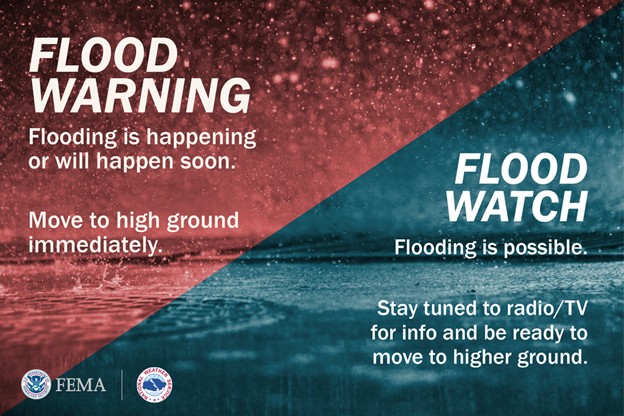
Flood Watch = “Be Aware.”
During a flood watch, conditions are right for flooding to occur in your area.
Montgomery County emergency responders and planners encourage residents to stay aware of the changing weather forecasts and make plans in advance to mitigate their effects.
Steps to Take
- Turn on your TV/radio. You will receive the latest weather updates and emergency instructions from your local stations.
- Know where to go. You may need to reach higher ground quickly and on foot. Have a family emergency plan ready.
- Build or restock your emergency kit. Include a flashlight, batteries, cash, and first aid supplies. Check your emergency kit regularly.
- Sign up for Alert Montgomery to get updates directly to your cell phone or email.
Prepare Your Home
- Bring in outdoor furniture and move important indoor items to the highest possible floor. This will help protect them from flood damage.
- Disconnect electrical appliances and DO NOT touch electrical equipment if you are wet or standing in water. You could be electrocuted.
- If instructed, turn off your gas and electricity at the main switch or valve. This helps prevent fires.
- If possible, clear storm drains of leaves and debris and check gutters.
- If your basement is prone to flooding, move valuables to a higher location.
- Store valuables and important personal papers in a waterproof container.
Plan your travel
- Avoid areas subject to flooding, including low spots, and stream crossings. Know alternate routes to avoid those areas. See the list of roads known to flood during significant rain events on the the Avoid Flooded Roads page or check out the map of frequently flooded roads.
- Remember, never attempt to drive over a flooded road – you can be stranded or trapped. The depth of the water and the condition of the road is not always obvious and very difficult to determine at night.
- Be careful if you are walking outside while there is a flood watch, as 6 inches of fast-moving water can carry away an adult.
Flood Warning = "Take Action!"
During a flood warning, flooding is either happening or will happen shortly.
A flood warning is issued when flash flooding of streams, creeks and low-lying areas is occurring or about to occur. The County is expected to get between three and five inches of rain with some periods of very heavy rain.
Steps to Take
- Move immediately to higher ground or stay on high ground. Get out of areas subject to flooding. This includes dips in roadways and other low spots, and areas near creeks or streams.
- Evacuate if directed.
- Avoid walking or driving through flood waters, Turn Around, Don’t Drown®! Just 6 inches of moving water can knock you down and one foot of moving water can sweep your vehicle away.
- Avoid areas that are already flooded, especially if the water is flowing fast. Do not attempt to cross flowing streams.
- Roadbeds may be washed out under flood waters.
- Do not camp or park your vehicle along streams and washes, particularly during threatening conditions. Be especially cautious at night when it is harder to recognize flood dangers.
During and After a Flood
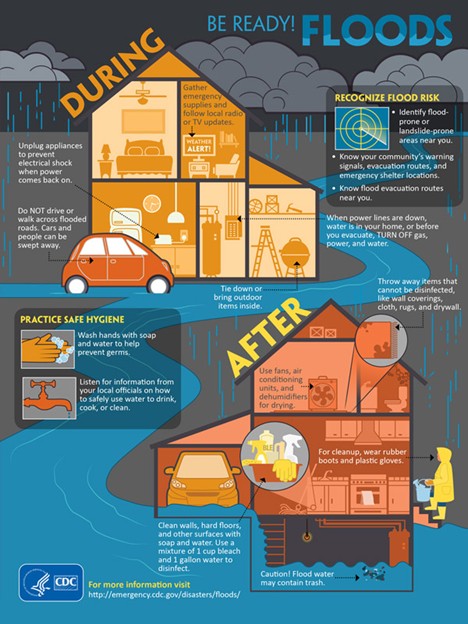 During
- Gather emergency supplies and follow local radio or TV updates.
- Unplug appliances to prevent electrical shock when power comes back on.
- Do NOT drive or walk across flooded roads. Cars and people can be swept away.
- When power lines are down, water is in your home, or before you evacuate, TURN OFF gas, power, and water.
- Tie down or bring outdoor items inside.
Recognize Flood Risk
- Identify flood-prone or landslide-prone areas near you.
- Know your community's warning signals, evacuation routes, and emergency shelter locations.
- Know flood evacuation routes near you.
Practice Safe Hygiene
- Wash hands with soap and water to help prevent germs.
- Listen for information from your local officials on how to safely use water to drink, cook, or clean.
After
- Throw away items that cannot be disinfected, like wall coverings, cloth, rugs, and drywall.
- Use fans, air conditioning units, and dehumidifiers for drying.
- For cleanup, wear rubber boots and plastic gloves.
- Clean walls, hard floors, and other surfaces with soap and water. Use a mixture of 1 cup bleach and 1 gallon water to disinfect.
- Caution! Flood water may contain trash.
For more information visit CDC Floods.