
Prepare Your Home
Know Your Risk
If your home or business is in a watershed that has been modeled by the County, use the Flood Risk Explorer to see the kind of impact different storm events may have on your area. For properties outside the watersheds modeled by the County, there are other tools that can provide some information about your relative flood risk. For example, First Street has developed a flood model that evaluates risks individual properties may face from flooding and other climate hazards. While First Street’s flooding model is not as robust as the County model because it doesn’t factor in the County’s storm drain infrastructure, it can provide some insight into your property’s relative risk from flooding.
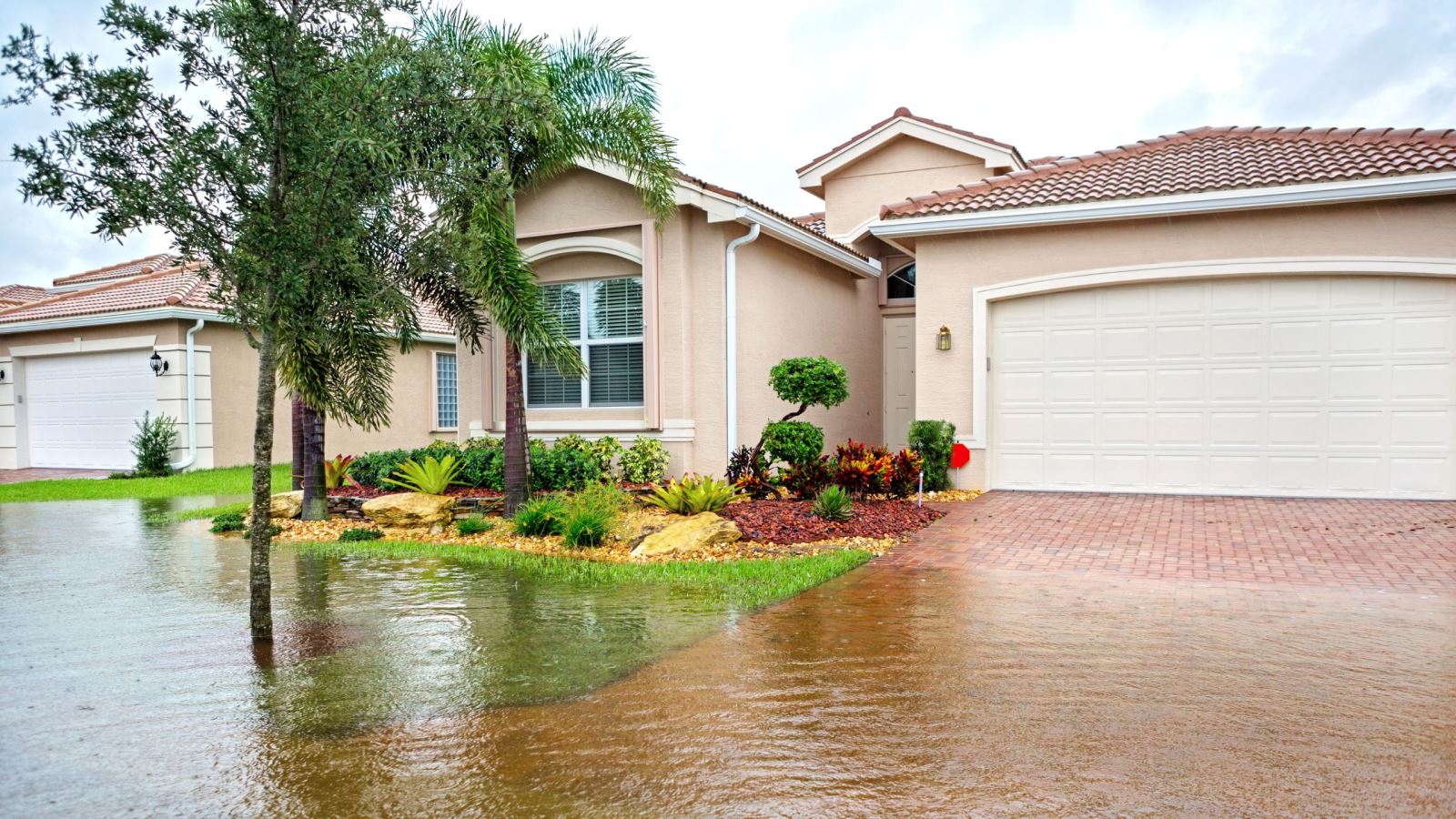
There are some basic questions that everyone can evaluate to assess whether their home, business, or property may face flooding risks.
These include:
- Has the area flooded before?
- Is your property at a lower elevation than surrounding properties?
- Does the ground around your home or business slope toward the structure, potentially allowing water to collect?
- Is any part of your home or business below ground level with access points (doors, windows, stairwells, etc.) that might provide a pathway for water to enter the structure?
- Do you have vehicles parked at a low point along a street, or in an underground garage?
Answering these questions may guide you toward actions that reduce your flood risk.
Protect Your Home and Property
There are a number of steps that homeowners and renters can take to protect their homes and property from flooding or minimize the impact of flooding. Some of these actions are simple and no or low-cost, while others may cost more and require permits from the County (or municipality if you live in a municipality with permitting authority).
- Move valuable and irreplaceable items from basements or other areas that could be prone to flooding.
- Move your vehicle to higher ground if it is parked in a low-lying area or an underground garage.
- If there is a storm drain inlet in the street near your home, check to see if it is blocked by debris and clear it if possible. Call 311 if assistance is needed to clear a blocked inlet. Never put leaves or other debris near or down a storm drain inlet, as this may prevent the flow of water into the inlet.
A variety of actions can be taken outside and inside a home or other structure to prevent or minimize flooding. The City of Rockville has a Flood Mitigation Assistance Program that offers financial assistance to Rockville residents to offset the cost of implementing flood mitigation measures. While the County does not have a similar financial assistance program, this is something the County will be investigating as part of the flood management planning process. Nonetheless, Rockville’s Flood Mitigation Assistance Program provides an excellent description of flood prevention and mitigation measures that should be considered if your home or property is at risk of flooding. These include:
- Protective measures for windows and doors
- Methods to seal or remove water from basements
- Practices to protect utilities
- Exterior modifications to deter floodwater
- Temporary water intrusion and removal measures
- Flood warning systems
Call 311 or your municipality if you are uncertain whether permits may be required to implement individual measures.
Support Natural Functions
Improving natural functions on your property can help to make your home safer during smaller rain events. Several options are listed below:
- Don’t cut trees unnecessarily. Trees can catch rain as it falls and absorb rain that reaches the ground in ways that can reduce local flooding.
- If you want to plant more trees on your property or in your area, check out the Tree Montgomery Program.
- Concrete isn’t always the answer. If you cover most of your lot with concrete or asphalt, there will not be a lot of places for water to go when the rain comes.
- Reach out to the Department of Permitting Services (DPS) as you modify your home. They can offer input on how changes could impact your property.
- Find out more about using pervious pavement options for driveways, patios, and more.
- Turf may not always be the answer either. Planting beds with trees, shrubs, and flowers can absorb more rainfall than turf.
- Reach out to RainScapes for more information about receiving rebates of up to $7500 for pavement removal or replacement with pervious paving, rainwater collection, and converting turf to native plantings.
- Respect your storm drains! Sending oil, trash, and debris down the storm drain can clog drains and impact whole neighborhoods. Before (or during!) a rain event, make sure that nothing is blocking the storm drains near your home and vehicles.
- If you know the storm drains in your area need maintenance, use 311 to contact the county.