Climate Smart: Plants
Back to Climate Smart Home
Care for the trees at your home
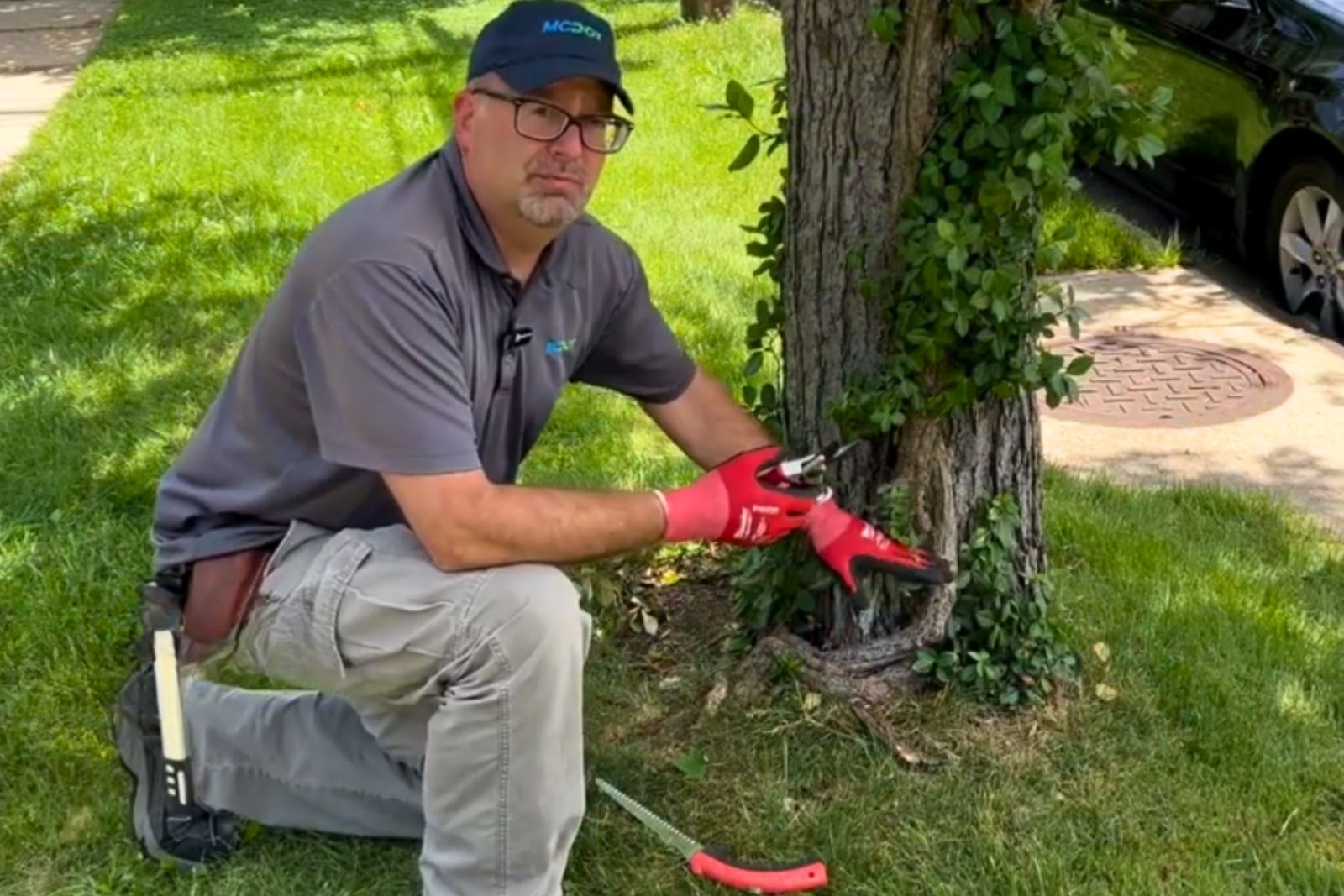
Become a weed warrior
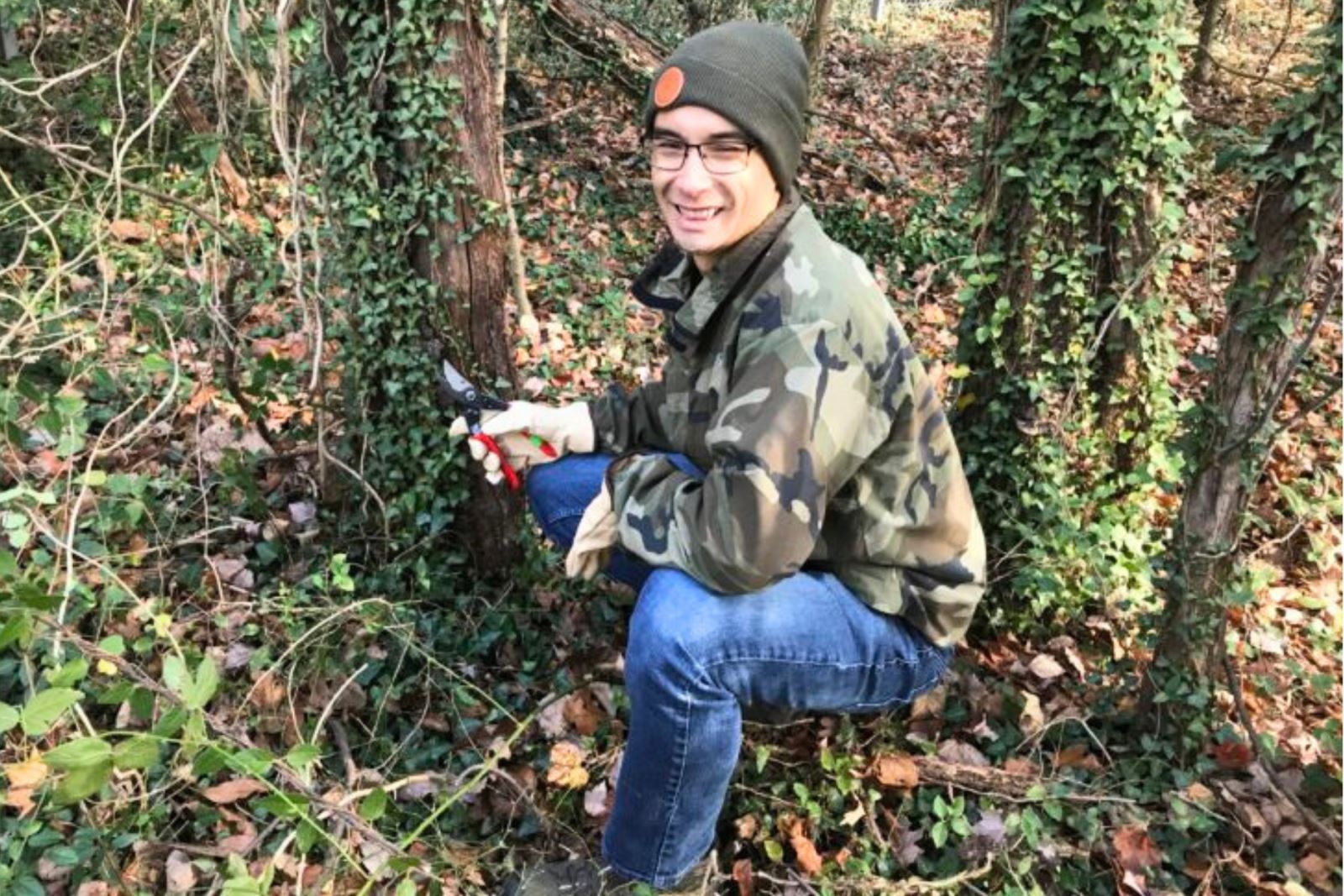 Photo courtesy of Montgomery Parks, M-NCPPC
- What to do: Volunteer with Montgomery Parks’ Weed Warriors Program to remove invasive vines killing mature trees with alarming frequency throughout Montgomery County
- Why? A mature tree can absorb more than 48 pounds of carbon pollution per year from the atmosphere. In 2024, Weed Warrior volunteers saved more than 19,000 trees from non-native invasive vines on Montgomery Park land! That’s a big impact.
- Bonus Tip: Weed Warrior Workdays are open to the public almost every week, and no advanced training is required.
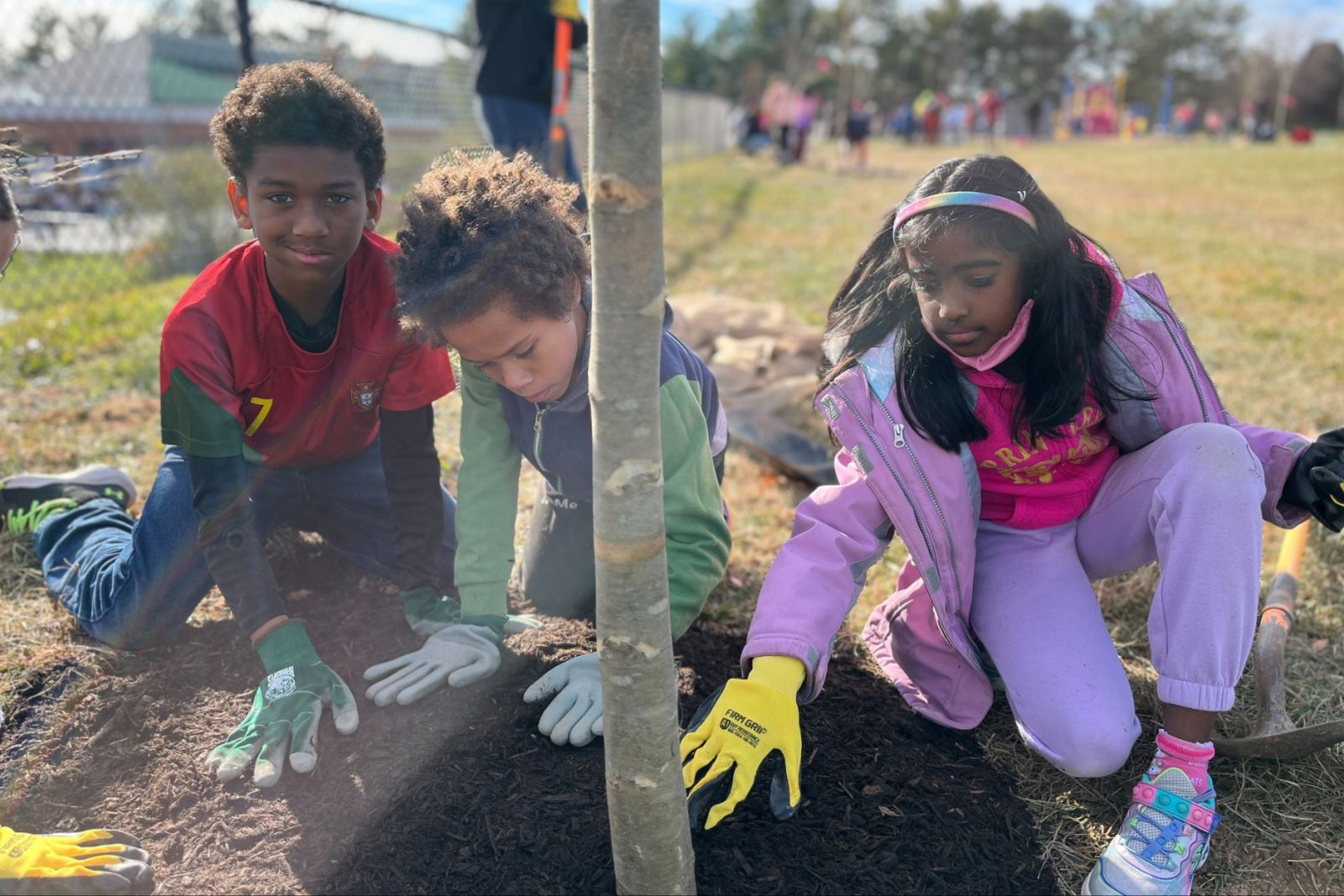
Plant a tree
- What to do: Plant a shade tree. Find out if you are eligible for a free shade tree through Tree Montgomery and learn about other tree planting programs.
- Why? Trees capture carbon pollution, reduce noise and stormwater pollution, and provide habitat for birds and other creatures.
- Bonus Tip: Shade trees can increase property values anywhere from 3% to 15%.
Ready for Bigger Change?
- Transform your yard. Replace turfgrass with native plants, install a rain garden or green roof, or use permeable pavement to soak up stormwater and reduce runoff. These projects protect streams, support pollinators, and cut emissions by reducing the need for irrigation and chemical use. Montgomery County’s RainScapes program offers rebates, workshops, and training to help you get started.
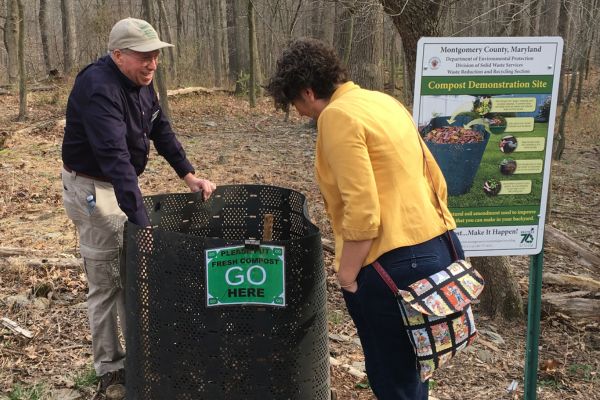
- Compost your yard trimmings. Composting yard trimmings like leaves, grass clippings, and small branches keeps valuable organic material out of landfills and turns it into nutrient-rich compost. Compost at home with a free bin from the County’s Backyard Composting Program, or set trimmings out for weekly curbside collection. Use finished compost around trees, in garden beds, or to enrich your lawn.