FY26 Funding Notice
The FY26 approved County Operating Budget included $13,846,720 in funds for the Office of Food Systems Resilience, which allows for the continuity of programs that enhance food access, promote, food sovereignty and sustainability, and build the self-sufficiency of our local food system. To help our partners prepare, OFSR highlights here funding opportunities included in the budget cycle that began this month.
The FY26 OFSR Budget includes:
- Community Food Assistance Grant Program, $3.7M (Anticipated Launch Early Augst 2025): Supports local organizations with direct funding for food assistance distribution services to residents and strengthening the capacity and stability of the County's robust network of community partners. New in FY26, organizations can also request funding for food recovery operations.
- Food as Medicine Grant Program, $750,000, (Anticipated Launch Spring 2026): Funding for innovative programs that connect pediatric patients experiencing diet-related disease and food insecurity to nutritious food assistance and education.
- School-Based Food Assistance Grants, $2.3M (Applications Closed 7/14/25): An additional $300,000 was added in FY26 to expand the reach of the program in this year's cycle.
- MC Groceries/ Retail Access Programs, $1.6M: MC Groceries helps families access fresh and shelf-stable food items through a convenient online shopping experience, receiving $100 in benefits per month for each eligible child 0-18 years old, up to $400. In Summer 2025, we partnered with Montgomery County DHHS to reenroll almost 400 families for another year and will soon launch a limited enrollment expansion for additional households. In FY26 OFSR will explore additional innovative strategies to support food retail access assistance for County families.
- Resilient Infrastructure- Local Food Aggregation Grant, $250,000 (Anticipated Launch September 2025): Multi-year single-award grant opportunity for operating and build-out costs to establish an aggregation facility for locally produced food, with the goal of helping to meet current and future wholesale and institutional market demand for these products.
- Nutrition Benefits Outreach Grant Program, $300,000 (Year Two Funding): Supports renewed funding for the multi-year FY25 NBO grantees that have maintained compliance and achieved successful performance outcomes in year one.
- Resident and Community Garden Grants, $100,000: Expands resident access to land, education, and resources to grow their own food. Program timeline and scope is being evaluated due to the 50% reduction in the final budget approved by County Council ($200,000 was recommended in the County Executive's Recommended FY26 budget).
- Food Recovery Network Coordination Grant Program, $125,000 (Application Deadline 8/18/25): Funds the coordination of expanded food rescue by a network of recovery operator organizations based in Montgomery County and the redistribution of these food resources to local food assistance providers.
- Funding to Capital Area Food Bank for Supply Chain and Provider Network Resilience, $750,000: Supports a supplemental, pre-purchased, and carefully curated supply of produce, shelf-stable products, and frozen protein made available weekly to the entire Montgomery County CAFB provider network for ordering at no cost. This helps insulate the food assistance system from major disruptions to the food supply and funds also ensure continued, consistent access to CAFB resources and technical assistance to providers.
- Contracts, $3M: Includes renewed funding for partnerships including Farm to Food Bank and Maryland Market Money, as well as a 3% inflationary adjustment for nonprofit contracts which is critical to maintaining operations, staff, capacity, and resilience within the County's food security network now and into the future.
- Funding for two additional FTEs to bolster OFSR's dedicated staffing capacity, a 50% increase to support the 1700% increase in program and contract funds allocated in FY25.
Key Initiatives for FY26:
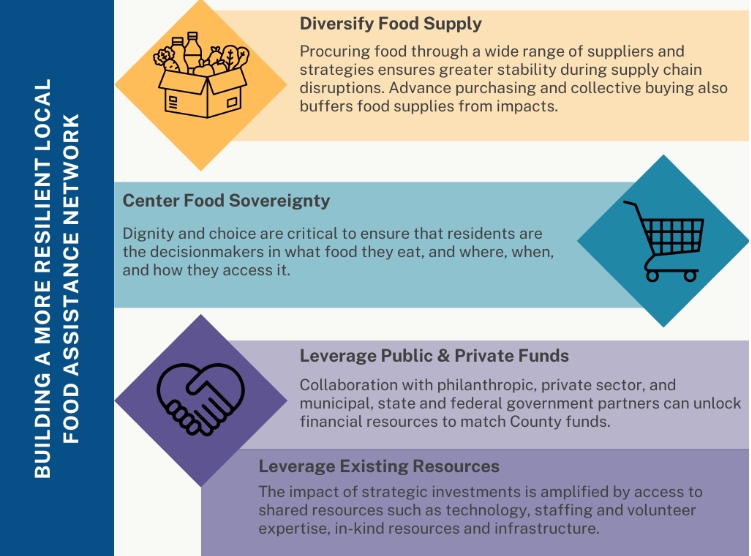
- Lead the final transition from federally supported pandemic-era funding approaches to a long-term framework for strategic investment in food security programs. This transition includes reinforcing the solid foundation of existing food security resources developed during the pandemic, while implementing new initiatives to close service gaps, align investments with values of equity and resilience, and better leverage Federal and State funds.
- Expand and enhance the implementation of the County's Strategic Plan to End Childhood Hunger recommendations; retail food access strategies including the MC Groceries program, the Food as Medicine and School-Based Food Assistance grant programs, and community partnerships to maximize enrollment in Federal nutrition programs.
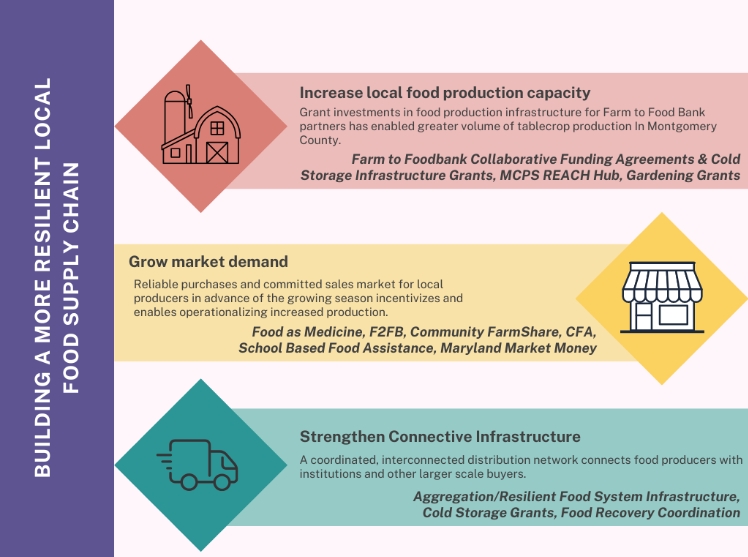
- Strengthen local food production and distribution through strategic and creative investments in projects that aggregate, process, and/or distribute food from local producers to increase immediate and long-term food security in the region. Direct purchases from local food farms, grants for Resident and Community Gardening projects, and operating and infrastructure funding for local food aggregation will expand local food production, market demand, and access for residents.
- Engage with statewide, regional, and national partners to share best practices, maximize external resources, and implement collaborative strategies for policymaking that strengthen food system resilience and address the racial inequities and disparities present in all aspects of the food system. Expand interagency coordination mechanisms for local government agencies and facilitate a County emergency response framework planning process for food system disruptions.
- Serve as a liaison between government and community partners, including residents, businesses, and non-profit organizations to ensure policy development and implementation is directly informed by the insight and expertise of the community.
- Implement a centralized grantee and contract vendor performance data reporting platform with core standard metrics to evaluate impact across all programs and data reporting requirements appropriately scaled to organizational capacity. The data collected and analyzed will afford a greater ability to identify level of need and service trends in real time, evaluate program performance, and inform future funding decisions.
For any questions regarding OFSR programs or funding in the FY26 Recommended Operating Budget, please contact Heather Buskin at [email protected].