
Insects and Trees: What’s Bugging Your Tree?
Residents should be alert to species that harm native trees in Montgomery County.
On this page
Spotted Lanternfly
Spotted lanternfly is an invasive insect species introduced to Montgomery County. While spotted lanternfly is not likely to cause long-term damage to forests and urban trees in Montgomery County, they will impact a few agricultural crops, especially grapes. The sticky honeydew they drop during feeding activities can turn black with sooty mold and may be a nuisance on decks, patios, or vehicles. Residents will likely see spotted lanternfly because they are large with bright colors and tend to congregate in large numbers.
More information is available through the University of Maryland Extension and the Maryland Department of Agriculture. Their websites maintain up-to-date information on spotted lanternfly’s spread throughout Maryland and its impact on homeowners, agriculture, and the wider ecosystem of the area.
What can you do?
- Residents are encouraged to report sightings of spotted lanternfly to the Maryland Department of Agriculture.
- Physically kill adults and nymphs or egg masses.
- Remove their preferred host tree, Tree-of-Heaven (Ailanthus altissima).
- It's important to never move firewood, buy it where you burn it even when vacationing.
- Spotted lanternflies are hitchhikers, so check your car before you head on a road trip that will take you outside Montgomery County so that you don't unknowingly spread them further.
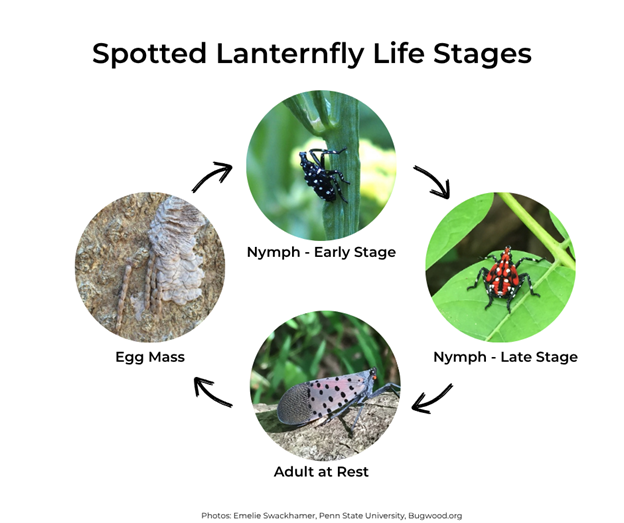 Photo Credit: Emelie Swackhamer, Penn State University, Bugwood.org
Image Text: Spotted Lanternfly Life Stages. Egg Mass, Nymph - Early Stage, Nymph - Late Stage, Adult at Rest
Emerald Ash Borer
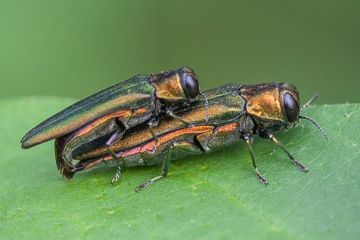 The emerald ash borer (EAB) is an exotic insect pest from Asia that infests and kills ash trees, typically within 3 years of infestation. EAB is widespread in the Lake States and the Mid-Atlantic. Montgomery County is now in the late stages of EAB infestation. There are treatment options available to protect ash trees from EAB, but early detection and treatment is critical. Infestation is very hard to detect during the first few years, but in its later stages the canopy will thin and die back. Increased woodpecker activity and small D-shaped exit holes in the bark of the tree is indicative of EAB infestation. In Montgomery County, most untreated ash trees are infested with EAB and should be treated before they decline or removed before they become hazardous to nearby homes, playgrounds, parking areas, etc. Ash trees were an important street tree and were a significant portion of the trees found in the local parks, especially along local rivers and streams.
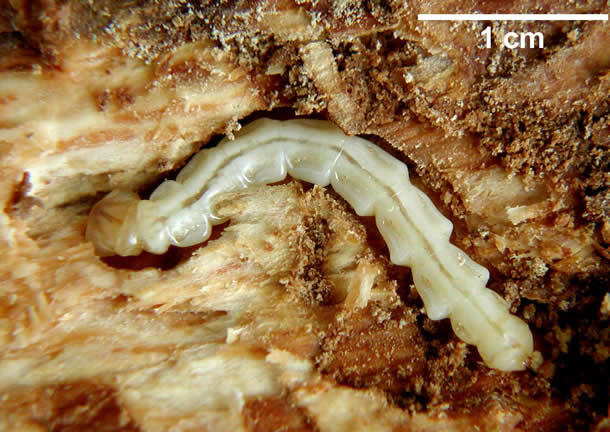 University of Maryland Extension and the Maryland Department of Agriculture have more information on EAB, infestation, and best management practices on their websites. For more information on EAB and Montgomery County street trees, check out the MCDOT Tree Maintenance Section's website.
What can you do? Maryland published a 'Homeowner’s Guide to Emerald Ash Borer'. Also, it’s important to never move firewood, buy it where you burn it even when vacationing.
Learn more about Emerald Ash Borer and how to protect your ash trees on our blog.
Spongy Moths (formerly Gypsy Moths)
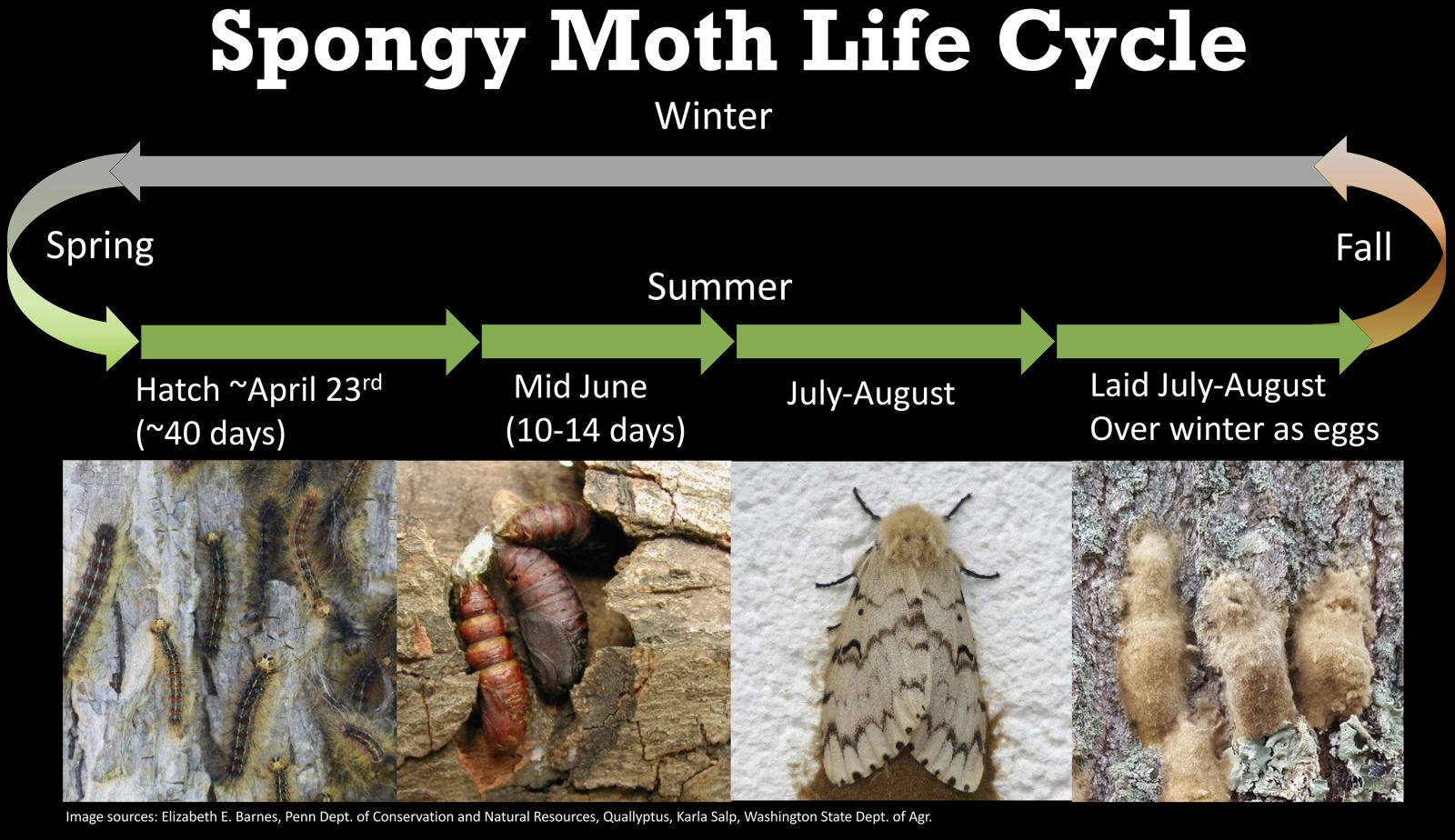
The spongy moth is a very destructive invasive species to forests and urban trees in Maryland and much of the eastern United States. Spongy moth caterpillars eat the leaves of trees, especially oaks. When populations of caterpillars are high, they eat most of the leaves off trees, weakening trees and making them more vulnerable to other pests and diseases, as well as drought, heat and urban pollution. In many cases, damage by spongy moths kills mature trees.
Montgomery County participates in a program with both the Maryland Department of Agriculture and the US Forest Service. Check out the Maryland Department of Agriculture Spongy Moth Program for more information. They have several helpful brochures for homeowners.
Four things you can do:
- Destroy egg masses. In the fall look for spongy moth egg masses in the crevices of tree trunks, fencing, under patio furniture and in woodpiles. Remove the egg masses by scraping them into a zip-top plastic bag containing some water and detergent to kill the eggs. Then put the bag in the trash. Be careful when removing egg masses because the hairs on the mass can cause topical allergic reactions.
- Stop the spread. It’s required by federal law to check before traveling or moving from Maryland to non-quarantine areas.
- Never move firewood, buy it where you burn it even when vacationing.
- Report a defoliation. Call Maryland’s spongy moth program at 410-841-5922.
Eastern Tent Caterpillars and Fall Webworms
Eastern tent caterpillars and fall webworms are two species of moths native to the mid-Atlantic. Both species are active each spring. Fall webworms are also active in late summer and fall. Both species build silken weblike tents in the branches of trees. The caterpillars spend nights in the protection of the tents and come out to feed on leaves during the day.
Typically, these caterpillars do not cause significant long-term damage to trees. However, their tents are often large and unsightly, especially when they hang in tree branches through the winter.
More information on tent caterpillars and fall webworms can be found on the University of Maryland Extension Service website.
Read Maryland Department of the Agriculture's overview of eastern tent caterpillars including more information about how to control them.
Two things you can do:
- Tear apart or poke holes in the tents with a stick or a pole allows birds to feed on the caterpillars.
- Prune branches with tents with hand or pole pruners. Put the cut branches and tents in plastic bags and dispose of them in the trash. Do not try to burn the tents with fire because it is dangerous and causes more damage to the tree than the caterpillars.
Don’t worry about spreading or moving these two species.They’re native to most of the eastern United States.
Which is it? Spongy Moths, Eastern Tent Caterpillars, or Fall Webworms?
These caterpillars are often confused. This fact sheet explains the differences between spongy moths and eastern tent caterpillars. Eastern tent caterpillars are native and are not a serious threat like spongy moth caterpillars. The eastern tent caterpillar builds a web-like tent in the spring while spongy moth caterpillars do not build any type of tent.
Are you seeing web-like tents in the fall? Most likely, these are Maryland’s native fall webworm. Like eastern tent caterpillars, their tents are ugly but this insect is generally harmless to people or trees.
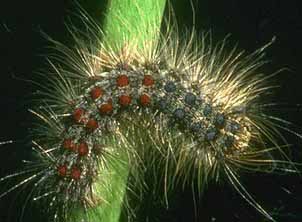 Spongy Moth
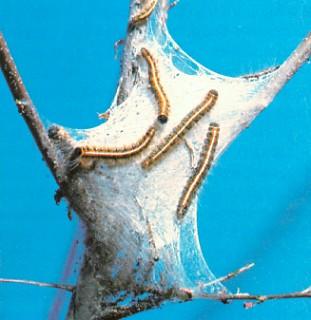 Eastern Tent Caterpillar
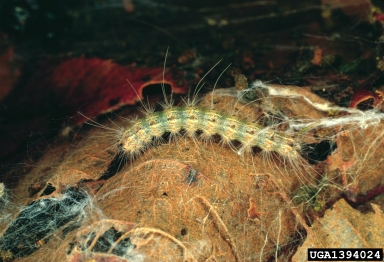 Fall Webworm
Credit: James B. Hanson, USDA Forest Service, Bugwood.org. Creative Commons Attribution-Noncommercial 3.0 License.
Brown Marmorated Stink Bug and Boxelder Bug
Brown marmorated stink bug (BMSB) and boxelder bugs are two “true insect” species, in the Hemiptera family, that are often found congregating on trees or on houses.
Brown marmorated stink bugs (BMSB) is an invasive stink bug native to East Asia. It feeds on a wide range of agricultural crops on landscaping plants. BMSB was introduced to the mid-Atlantic in the mid-1990s and rose to prominence when it caused severe damage to orchard crops and vineyards in 2009-2010. Residents typically encounter BMSB during fall and winter when the insects seek refuge in heated buildings for the cooler months. BMSB does not cause significant damage to landscaping trees. Home gardeners of vegetables, fruit, and flowers can find more details on controlling BMSB on the University of Maryland Extension website.
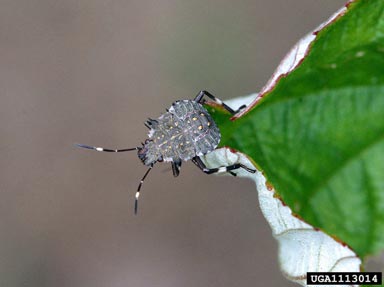
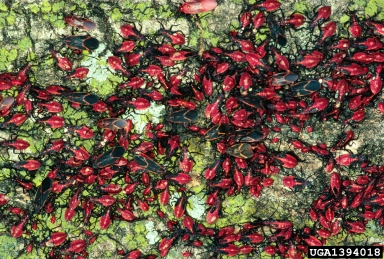
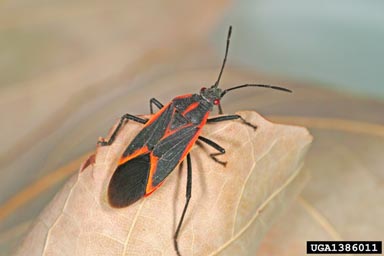
Boxelder bug is a native insect to the mid-Atlantic, often observed congregating on trees and in and around homes. They typically feed on boxelder trees, a common native species to Montgomery County, and the closely related silver and red maple species (two of our most common trees). Boxelder bugs do not cause significant damage to shade trees, but they frequently congregate on the sunny side of buildings and often enter homes to hibernate during cold weather. For more information on boxelder bug, please see the University of Maryland Extension website for more information.
What can I do?
- Don’t let the bugs in! Caulking and weatherstripping windows, doors, and other cracks is the most effective method of keeping these bugs from entering your home.
- Eliminate hiding places around your home, like piles of wood or rocks.
- Vacuum or sweep up bugs, both inside and outside of your house. Discard them.