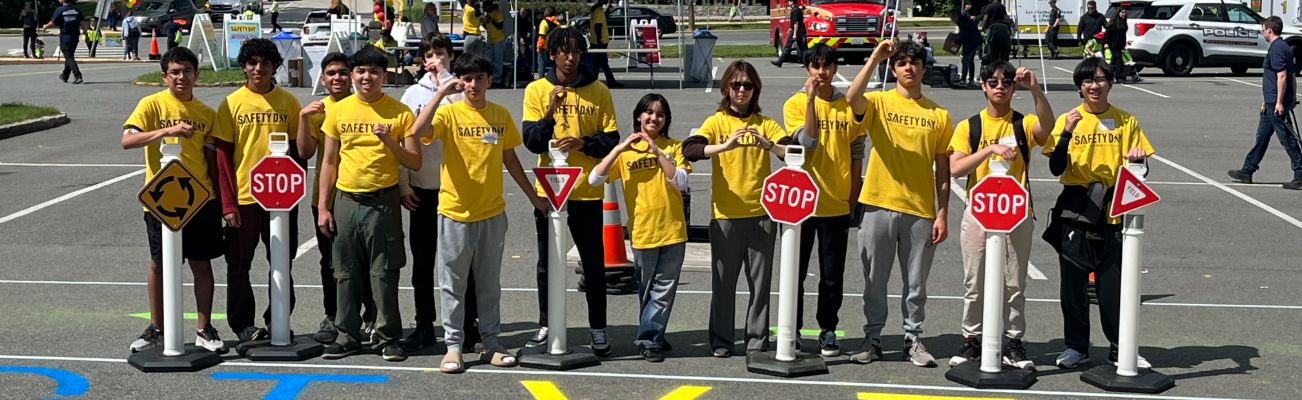
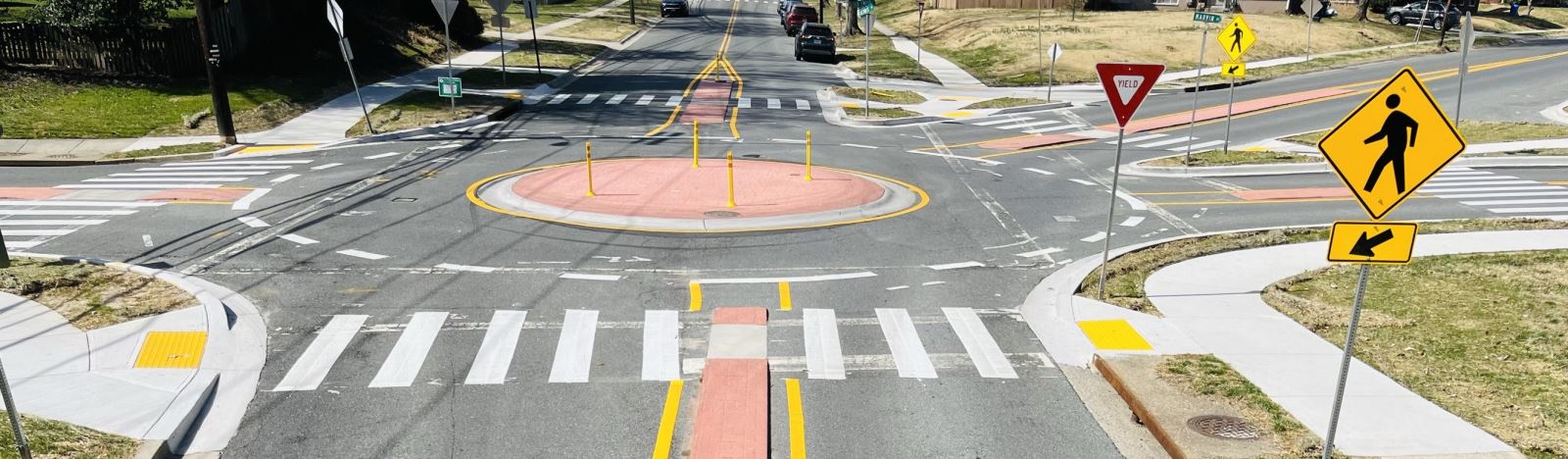
Find projects in your neighborhood.
Use our Vision Zero project map.
Fiscal Year (FY) 2026 Vision Zero Work Plan
This version of the County Fiscal Year (FY) 2026 work plan details the work assigned under each action item. Each action item and its associated tasks are displayed on one page to provide easier navigation between the plan’s 3 pillars (Complete Streets, Multimodal Future, and Culture of Safety) and the 45 action items. Select the title of an action item to see what is planned this year.
Under the Vision Zero 2030 Action Plan, work plans are updated every even (22, 24, 26) fiscal year to make continual progress on all 45 action items.
Update October 1, 2025: The FY2026 Work Plan was updated to add in rolled over items that were incomplete from the FY2025 Work Plan.
How to read action item descriptions
Each action item in the work plan has the same elements and are described in detail below.
- Action Item Details: Provides additional information about the long-term action item.
- Action Item Description: Long-term action item description. This describes the ongoing work throughout the plan’s lifetime to fully implement the action item.
- Lead: Department(s) that will be directly involved and providing resources to implement the action item.
- Contributor: Department(s) that have a minor or supporting role and work with the lead department(s) to implement the action item.
- Priority: If listed as a priority action next to the action item number, the action item is a top ten action item for the Action Plan. Priority actions have the potential to have the highest impact on reducing serious and fatal injuries, can be applied across the transportation network, and support safe travel for all modes.
- Why do this: An explanation of why this action item is in the Plan and how it is expected to affect traffic safety in the county.
- Budget Sources: Programs and projects in the operating and capital budgets for the County that will provide resources to complete the action items for the two years of the Plan. If there are outside grant opportunities to support work in the action item, the grant source is listed.
- Fiscal Year (FY) 2026 Work Plan: List of work to be performed during the fiscal year (July 1, 2025 to June 30, 2026). Items listed are within the scope of existing resources.
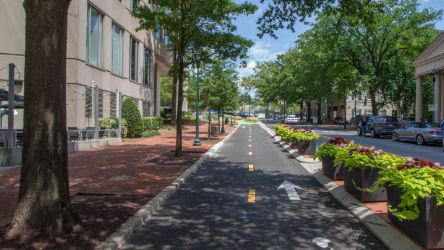
Complete Streets
Create streets with frequent, protected crossings, adequate space accommodating those walking, biking, using assistive mobility devices, and roadway features to keep all vehicles traveling at safe speeds.
Open all action items | Close all action items
S-01: High Injury Network Projects (★ Priority Action Item)
Action Item Details
- Action Item Description: Implement safety countermeasures on identified high-risk road segments and intersections. The County must coordinate with the State for state-maintained portions of the network.
- Lead: Transportation, State Highway Administration
- Contributor: N/A
- Why Do This?: Vision Zero requires a proactive approach to place limited resources in areas with the highest return on safety and equitable distribution compared to request-driven programming. Road safety audits can reduce crashes upwards of 60%.
- Budget Sources: P500333 - Pedestrian Safety, P507017 – Intersection and Spot Improvements, P509337 – Facility Planning-Roads. Grant opportunities – MWCOG Regional Safety Program (study and design only), USDOT Safe Streets and Roads for All.
FY26 Work Plan
-
Studies and Planning
- Develop High Injury Network projects for Facility Planning to start design for long-term recommendations from roadway safety audits.
- Conduct post implementation review of up to 2 HIN Corridors and up to 10 spot locations.
-
Finalize mid-term design improvement for 2 HIN corridors
- Randolph Rd from Connecticut Ave to Georgia Ave
- Crystal Rock Dr from Father Hurley Blvd to Germantown Rd.
-
Construct short and mid-term improvements along 2 HIN corridors
- Bel Pre Rd from Georgia Ave to Layhill Rd.
- Montgomery Village Ave from Wightman to Midcounty Hwy.
S-02: Intersection Redesign and Quick Builds
Action Item Details
- Action Item Description: Shorten crossing distances for pedestrians and cyclists and slow down the turning speed of vehicles through intersection modifications. Utilize quick build materials where appropriate.
- Lead: Transportation, State Highway Administration
- Contributor: N/A
- Why Do This?: Reducing pedestrian exposure and slowing turning vehicles can prevent crashes and serious injuries. 56% of serious and fatal injuries occurred at or related to intersections.
- Budget Sources: P500333 - Pedestrian Safety, P507017 – Intersection and Spot Improvements, P509523 – Neighborhood Traffic Calming. Grant – USDOT Safe Streets and Roads for All.
FY26 Work Plan
- Utilize quick build materials (flex posts, quick curb, signing, and pavement markings) or full build-out (concrete curb and gutter bump-out) as appropriate for interim safety treatments that include vehicle speed reduction and warnings at motor vehicle and pedestrian conflict locations.
- Complete grant agreement and contracting for Safe Streets and Roads for All for radii reduction/sharpening treatments at up to 100 intersections or crossings.
- Advance design for two intersection and spot improvement projects.
- Begin construction on one intersection improvement project.
- Develop grant agreement with Federal Transit Administration and WMATA for intersection reconfiguration at Old Georgetown Road and Rockville Pike (MD 355) as part of Project Connect – North Bethesda.
S-03: Protected Crossings with Traffic Signals and Beacons (★ Priority Action Item)
Action Item Details
- Action Item Description: Provide additional protected crossing locations by installing new traffic signals and beacons, with priority installations in high crash risk areas with infrequent crossing opportunities.
- Lead: Transportation, State Highway Administration
- Contributor: Parks
- Why Do This?: Provide safe, convenient crossings to reduce crossing outside of crosswalks. Pedestrian hybrid beacons can reduce pedestrian-involved crashes by 55%.
- Budget Sources: P507154 - Traffic Signals, P500333 - Pedestrian Safety, P507017 – Intersection and Spot Improvements. Grant – MDOT SHA Highway Safety Improvement Program.
FY26 Work Plan
- Install two signals and two beacons.
S-04: Signal Timing and Phasing (★ Priority Action Item)
Action Item Details
- Action Item Description: Where appropriate, modify signal phasing and timing to provide protection for all road users.
- Lead: Transportation, State Highway Administration
- Contributor: N/A
- Why Do This?: 56% of serious and fatal injuries occurred at or related to intersections. Signal phasing changes, such as providing pedestrians 3-7 seconds to cross roadways before vehicles can turn can lower pedestrian-vehicle crashes by 13% at intersections.
- Budget Sources: P507154 - Traffic Signals, P500333 - Pedestrian Safety, P507017 – Intersection and Spot Improvements. Grant opportunities – MWCOG Regional Safety Program (study and design only), USDOT Safe Streets and Roads for All.
FY26 Work Plan
- Finalize Safe Streets Act of 2023 implementation for No Turn on Red and Leading Pedestrian Interval. Monitor installed locations for potential follow-up.
- Signal phasing and timing changes along HIN corridors moving to construction in S-1, when feasible.
S-05: Corridor Access Management
Action Item Details
- Action Item Description: Assess and remediate safety concerns created by uncontrolled turning movements to and from arterial and collector roads to neighborhoods and driveways with direct access with a specific focus on left turn safety issues.
- Lead: Transportation, State Highway Administration, Planning
- Contributor: N/A
- Why Do This?: 20% of serious and fatal crashes that occurred at or was related to an intersection or interchange had no traffic control device or person present.
- Budget Sources: P507154 - Traffic Signals, P500333 - Pedestrian Safety, P507017 - Intersection and Spot Improvements.
FY26 Work Plan
- Implement safety improvements to address identified left turn issues up to 3 intersections, when feasible.
- Grandview Ave and Blueridge Avenue – modify northbound left-turn movement.
- Begin development of Comprehensive Transportation Guidelines for Development Review.
- Pursue updates to Chapter 50 and Chapter 59 in the county code.
- Rollover from FY25: Advance access management study by considering changes to the county code and development review procedures.
S-06: Roadway Departure
Action Item Details
- Action Item Description: Improve roadways where run off the road crashes are prevalent, at curves and along country roads, utilizing repaving and safety programs. Prevent run-off-the-road events using higher friction road surface materials and guardrails, reduce serious collisions by removing fixed objects and using breakaway poles.
- Lead: Transportation, State Highway Administration
- Contributor: N/A
- Why Do This?: 24% of serious or fatal injury crashes for motor vehicle occupants involve running off the road and 34% of vehicle occupant fatalities occur at curves in the road.
- Budget Sources: P508113 - Guardrail Projects, P508527 – Resurfacing: Primary/Arterial. Grant – MDOT SHA Highway Safety Improvement Program.
FY26 Work Plan
- Complete grant agreement and contracting for high friction surface treatment Highway Safety Improvement Program awarded in 2025.
S-07: Separated, Low-Stress Bicycle Facilities (★ Priority Action Item)
Action Item Details
- Action Item Description: Build bikeways identified within the Tier 1 network of the Bicycle Master Plan. Prioritization of any bike facility projects must also prioritize upgrading known high crash risk roads. Tier 2 and 3 should be considered when opportunities arise such as redevelopment, repaving, or would increase safety on a high crash risk road.
- Lead: Transportation, Parks, State Highway Administration
- Contributor: Planning
- Why Do This?: Creating separated spaces for all users of the transportation network in dense, multi-modal areas provides for enhanced safety, comfort, and predictability for movements.
- Budget Sources: See Pedestrian Facilities and Bikeways projects on OMB website for list of project numbers. Grant opportunities: MDOT Kim Lamphier Bikeways Network Program, MWCOG Transportation Land-Use Connections Program.
FY26 Work Plan
- 1 Project Completing Facility Design
- 3 projects completing 70% design
-
8 projects completing 95% design
- Bowie Mill Road Shared Use Path
- Burlington Ave/13th Street Separated Bike Lanes
- Carrol Ave Separated Bike Lanes
- Cheltenham Drive Bikeway
- East Silver Spring (Grove St) Greenway
- Flower Ave bikeway
- Montgomery Avenue Phase 2C
- Norwood Shared Use Path (Olney-Sandy Spring Road (MD 108) to Ashton Forest Way)
-
9 projects starting construction
- Amherst Avenue Bikeway
- Clarksburg (Maryland Route 355) Shared Use Path
- Dale Drive Shared Use Path
- McComas Ave neighborhood greenway
- Fenton Street Cycle-Track
- Good Hope Road Shared Use Path Extension
- Heritage Triangle Trail Phase I, Dr. Bird/Norwood Road from MD 108 to Layhill Road Shared Use Path
- Woodmont Avenue Cycletrack Phase 2
- MacArthur Boulevard Bikeway Improvement Segement 3
- 3 projects with on-going or completing construction
Learn more about bikeway and shared use path projects on MCDOT’s Bikeways Project Page.
S-08: Safe Trail Crossings
Action Item Details
- Action Item Description: Systematically upgrade the 156 trail crossings for safety improvements and develop safe trail connections to neighborhoods. Create standalone CIP projects for larger improvements such as major signal improvements or bridges.
- Lead: Parks
- Contributor: Transportation
- Why Do This?: Park trails cross 156 intersections in the County and create conflict points between trail users and cross traffic.
- Budget Sources: P871905 - Vision Zero (Parks), Safe Streets and Roads for All grant awarded in 2023.
FY26 Work Plan
- Continue systematic upgrades of trail crossings at 8-12 crossings per year.
- Continue design and construction on Safe Streets and Roads for All trail crossing projects.
S-09: Safe Routes to School Engineering Projects
Action Item Details
- Action Item Description: Evaluate the infrastructure safety needs and construct improvements near MCPS schools to improve access and encourage students to walk to school (sidewalks, protected crossings, crossing guards, appropriate speed limits, etc.)
- Lead: Transportation, State Highway Administration, Public Schools, Police
- Contributor: Planning
- Why Do This?: Safety improvements made within a quarter mile of MCPS schools by MCDOT have lowered the number of pedestrians and cyclists struck by motor vehicles and create more opportunities for students to safely walk or bike to school.
- Budget Sources: P509036 - Transportation Improvements for Schools, P500333 - Pedestrian Safety, Operating Budget Program – Community/Transportation Safety.
FY26 Work Plan
- Reduce speed limits on targeted roadways around schools.
- Perform five walkability audits covering 15 school walk sheds.
- Construct short and mid-term recommendations for at minimum five school walk sheds.
- Construct sidewalk along prioritized roadway segments within three school walk sheds.
S-10: Provide Safety Upgrades During Routine Maintenance
Action Item Details
- Action Item Description: Utilize repaving, tree pruning, and other maintenance schedules to provide lane widths, pedestrian and bicycle infrastructure, and other safety countermeasures as described in the CSDG that will bring the design speed closer to the speed limit and clear sightlines and walking paths from overgrowth.
- Lead: Transportation, State Highway Administration
- Contributor: Utility companies
- Why Do This?: Utilizing planned roadway and tree maintenance projects provides opportunities to implement safety projects across the county.
- Budget Sources: P508527 - Resurfacing: Primary/Arterial, P500511 - Resurfacing: Residential/Rural Roads, P500700 – Street Tree Preservation.
FY26 Work Plan
- Review striping plans and opportunities for safety improvements along High Injury Network (HIN) corridors and school walk sheds.
S-11: Improved Lighting (★ Priority Action Item)
Action Item Details
- Action Item Description: Improve nighttime illumination utilizing leading practices for illumination and lighting, regular identification and replacement dark or dim streetlight luminaires, and installing lighting in areas with high crash risk and high pedestrian crossing locations.
- Lead: Transportation, State Highway Administration, Utility companies
- Contributor: N/A
- Why Do This?: Two-thirds of pedestrian fatalities occurred in the dark.
- Budget Sources: P507055 – Streetlighting, P500512 - Streetlight Enhancements - CBD/Town Center, P502407 – US 29 Streetlighting.
FY26 Work Plan
- Install LED streetlights in the Wheaton and Silver Spring Central Business Districts.
- Complete design of US29 lighting and advance to construction.
S-12: Sidewalk Repair and Clearance
Action Item Details
- Action Item Description: Ensure sidewalks are in good repair, free from obstructions, and meet or exceed the Americans with Disabilities Act (ADA) requirements. Continue to update sidewalk survey to proactively address trip and other hazards from uneven or blocked sidewalks.
- Lead: Transportation
- Contributor: State Highway Administration
- Why Do This?: Moving sidewalk repairs to a more proactive repair model will identify and fix problems without a community request, but will still allow for requests.
- Budget Sources: P508182 - Sidewalk and Curb Replacement.
FY26 Work Plan
- Utilize sidewalk survey to prioritize fixes and repairs for critical maintenance issues.
S-13: Sidewalk Construction and Upgrades (★ Priority Action Item)
Action Item Details
- Action Item Description: Construct and reconstruct sidewalks with proper clearance and street buffer zones as recommended in the Complete Streets Design Guide. Leverage temporary measures, such as walking lanes, on low traffic volume roads.
- Lead: Transportation
- Contributor: State Highway Administration
- Why Do This?: Providing separation between pedestrians and motor vehicles creates room for error (roadway departures and falls) and encourages active transportation options.
- Budget Sources: P506747 - Sidewalk Program Minor Projects, P501908 – Oak Drive/MD 27 Sidewalk.
FY26 Work Plan
- Standalone CIP sidewalk projects.
- Maryland Route 198 Sidewalk (95% plans)
- Maryland Route 27 Sidewalk (95% plans)
- Sidewalk program minor projects – construct 25,000 liner feet of sidewalk.
- Continue Purple Line BiPPA sidewalk construction as determined through community outreach/input.
S-14: High Visibility Equipment and Markings
Action Item Details
- Action Item Description: Continue using regular maintenance to upgrade traffic signals to have retroreflective borders and refresh/install new crosswalks with continental striping.
- Lead: Transportation, State Highway Administration
- Contributor: N/A
- Why Do This?: Improving visibility of traffic signals, signs, and crosswalks can improve driver compliance with stopping at crosswalks, stop signs, and stop lights.
- Budget Sources: Operating Budget Program – MCDOT – Community/Transportation Safety, P507154 - Traffic Signals.
FY26 Work Plan
- Refresh or install at minimum 500 crosswalks with continental striping.
- Install at minimum 10 retroreflective borders at new / existing signalized / PHB intersections.
S-15: Shared Streets
Action Item Details
- Action Item Description: Develop a permanent version of the Shared Streets program created in 2020 to rethink how public right-of-way is used that can prioritize non-motorist travel and provide benefits to businesses and residents.
- Lead: Transportation, Parks, Planning, Urban Districts
- Contributor: N/A
- Why Do This?: The Shared Streets program created during the COVID-19 pandemic provided a model to make quick changes to the roadway to benefit restaurants, retail, walking, and cycling.
- Budget Sources: Operating Budget Program – MCDOT – Community/Transportation Safety, P507596 - Bikeway Program Minor Projects (for greenways), Grant opportunities: MDOT Kim Lamphier Bikeways Network Program, MWCOG Transportation Land-Use Connections Program.
FY26 Work Plan
- Complete facility planning for Newell Street Shared Street.
S-16: Data Informed Decisions
Action Item Details
- Action Item Description: Utilize and combine data sources regarding crashes, infrastructure, land use, traffic volume, etc. to identify high crash risk areas and potential countermeasures. Infuse data in the budget and decision-making process to improve safety and equitable outcomes.
- Lead: Police, Planning, Transportation, Management and Budget
- Contributor: Vision Zero Coordinator, Maryland Highway Safety Office, Maryland State Police
- Why Do This?: Vision Zero requires a proactive approach to place limited resources in areas with the highest return on safety and equitable distribution compared to request-driven programming.
- Budget Sources: Operating Program– Vision Zero Non-Departmental Account.
FY26 Work Plan
- Continue updates for existing data feeds, dashboards, and interactive tools.
- Refresh the High Injury Network (HIN) with recent crash data to be incorporated into the Vision Zero 2030 Action Plan update.
S-17: Equitable Project Intake and Selection
Action Item Details
- Action Item Description: Regularly review program intake processes to ensure resources are being used equitably, meeting community needs, and working towards Vision Zero.
- Lead: Vision Zero Coordinator
- Contributor: Transportation, Police, Management and Budget, Office of Racial Equity and Social Justice
- Why Do This?: Implementing Vision Zero requires all traffic safety programs to be data informed, proactive, and equitable, which may come from County identification of issues and resident requests. Improving the triage of incoming requests was a priority recommendation from the Equity Task Force.
- Budget Sources: Operating Program – Vision Zero Non-Departmental Account.
FY26 Work Plan
- Explore opportunities to develop and implement a Vision Zero specific equity training for Vision Zero partners.
- Rollover from FY2025: Update and complete review for distribution of community requests for pedestrian safety and accessibility concerns and potential for inequitable outcomes for complaint-driven processes.
M-01: Examine Speed Limit on Transportation Projects (★ Priority Action Item)
Action Item Details
- Action Item Description: Use ongoing safety and maintenance projects as an opportunity to review potential modifications to roadway design, through geometric or lane width changes, to bring the design speed in line with the desired target and posted speed limit.
- Lead: Transportation, State Highway Administration
- Contributor: N/A
- Why Do This?: Speed management is a fundamental factor in reducing serious and fatal injuries for all road users.
- Budget Sources: P509523 – Neighborhood Traffic Calming, P509036 - Transportation Improvements for Schools, P509523 – Neighborhood Traffic Calming, P500333 - Pedestrian Safety.
FY26 Work Plan
- Implement speed limit reductions along roads receiving safety and maintenance treatments as appropriate.
M-02: Speed Management Policy
Action Item Details
- Action Item Description: Utilize leading, evidence-based practices for setting context sensitive speed limits that align with Vision Zero and the safe systems approach.
- Lead: Transportation, State Highway Administration
- Contributor: N/A
- Why Do This?: Speed management is a fundamental factor in reducing serious and fatal injuries for all road users.
- Budget Sources: Operating Budget Program – MCDOT–Community/Transportation Safety.
FY26 Work Plan
- Continue review and update to County and State laws and policies to allow setting speeds as recommended.
M-03: Enforcement of Speed Limits
Action Item Details
- Action Item Description: Utilize hybrid (automated and officer initiated) approach for keeping drivers of motor vehicles at or below the speed limit.
- Lead: Police
- Contributor: Transportation
- Why Do This?: High Visibility Enforcement is a proven countermeasure and universal traffic-safety approach designed to create deterrence and change unlawful and risky driving behaviors.
- Budget Sources: Operating Program – MCPD-Field Services, Grant opportunity: MHSO Grants and Projects for Safety (GPS).
FY26 Work Plan
- Utilize County and MHSO funding for saturation patrols against speeding and aggressive drivers.
- Begin using “speed on green” automated enforcement using eligible red-light camera locations for speed enforcement when the light is green.
- Complete contracted expansion of speed and red-light fleet.
Multimodal Future
Ensure that the design, construction, and operation of existing or new travel options do not create hazards and work to remove existing ones.
Open all action items | Close all action items
T-01: Pedestrian and Bicycle Infrastructure Improvements Along New Transportation Projects (★ Priority Action Item)
Action Item Details
- Action Item Description: Build pedestrian and bicycle infrastructure and wayfinding for Purple Line and future Bus Rapid Transit (BRT) routes to create complete streets on transit corridors
- Lead: Transportation
- Contributor: State Highway Administration
- Why Do This?: Implementation of new transit along high crash highways presents a once-in-a-generation opportunity to redevelop highways into safer multimodal boulevards.
- Budget Sources: P502004 – BiPPA–Purple Line, P501316 - Capital Crescent Trail, P501110 – Metropolitan Branch Trail, P501318 - Bus Rapid Transit: System Development, P501913 – BRT: Veirs Mill Road, P502005 - BRT: MD 355 Central, P502309 – BRT MD 355 South/North, P502201 – BRT US 29-Phase 2.
FY26 Work Plan
- Veirs Mill Road Bus Rapid Transit – Continue property acquisition and begin utility relocation.
- MD 355 Central - Begin final design and identify early start items for utility relocation.
- Bikeway projects for Purple Line access listed under action S-07: Carroll Ave Bikeway, Piney Branch Road Bikeway, Flower Ave Bikeway, East Silver Spring Greenway, Dale Drive, Woodmont Cycletrack Phase 2, Fenton St Bikelanes, and Metropolitan Branch Trail.
- Sidewalk project for Purple Line access listed under action S-13: Takoma-Langley Station Area, Piney Branch Station Area.
T-02: Transit Stop Safety (★ Priority Action Item)
Action Item Details
- Action Item Description: Provide safe crossings to and from transit stops through auditing transit stops and implementing audit recommendations. Develop consistent bus stop infrastructure (poles, benches, shelters, etc.)
- Lead: Transportation
- Contributor: WMATA, State Highway Administration
- Why Do This?: Many transit stops in the county lack a safe and convenient crossing. Pedestrians have been struck and killed when walking to and from bus stops in the county.
- Budget Sources: P500333 - Pedestrian Safety, P507017 – Intersection and Spot Improvements, P509337 – Facility Planning-Roads. Grant opportunities – MWCOG Regional Safety Program (study and design only), USDOT Safe Streets and Roads for All.
FY26 Work Plan
- Reconstruct floating bus stops in Downtown Silver Spring at two (2) intersections: Spring St & Ellsworth Dr and Cedar St & Pershing Ave.
- Pending federal funding, begin development of Vision Zero design standards for Ride On bus stops.
- Implement crossing upgrades near bus stops or bus stop relocation/consolidation for 2-3 corridors along high crash risk routes, when feasible.
T-03: School Bus Stop Safety
Action Item Details
- Action Item Description: Systematically review and upgrade school bus stop locations and pick up/drop off at schools to ensure student safety.
- Lead: Public Schools
- Contributor: Transportation
- Why Do This?: Provide pickup and drop off locations that minimize the need to cross or wait for a bus along multi-lane roads.
- Budget Sources: P500333 - Pedestrian Safety, P507017 – Intersection and Spot Improvements, P509337 – Facility Planning-Roads. Grant opportunities – MWCOG Regional Safety Program (study and design only), USDOT Safe Streets and Roads for All.
FY26 Work Plan
- Continue coordinated crash information sharing and reviews between Police, County Transportation, and Public Schools under the Safe Streets Act of 2023.
T-04: Eliminate Sidewalk Obstructions
Action Item Details
- Action Item Description: Provide clearance space on sidewalks and consider restrictions or bans to ensure placement of signs, newspaper boxes, and trash bins do not block safe passage.
- Lead: Transportation, State Highway Administration, Environmental Protection
- Contributor: N/A
- Why Do This?: Two cyclists were killed in the past five years when they struck an object temporarily placed on the sidewalk and fell into the roadway.
- Budget Sources: P506747 – Sidewalk Minor Projects.
FY26 Work Plan
- Continued coordination with Sidewalk program to provide clearance space on pedestrian projects.
T-05: Maintenance of Travel (M.O.T.) during Sidewalk and Road Closures
Action Item Details
- Action Item Description: Ensure construction and other road closures do not create roadway safety hazards by utilizing County and State laws and policies to enforce the law and communicate with the public about closures and how to report violations.
- Lead: Permitting Services, Transportation, State Highway Administration
- Contributor: N/A
- Why Do This?: Short and long-term closures for construction can create unnecessary safety hazards, particularly for pedestrians and cyclists if their travel options are cut off.
- Budget Sources: Operating Program – DPS–Zoning and Code Compliance.
FY26 Work Plan
- Continue support for public maps showing historical and active right-of-way permits.
T-06: Bike and Micromobility Parking
Action Item Details
- Action Item Description: Install micromobility corrals across the County, with priority in major activity centers, to provide safe and convenient parking for bikes and other micromobility devices (e.g., e-scooters) to keep the sidewalks, bike lanes, and roads clear.
- Lead:Transportation
- Contributor: N/A
- Why Do This?: The County is encouraging use of more transportation options and keeping bikes and e-scooters off the sidewalk and road helps to eliminate sidewalk obstructions.
- Budget Sources: P501532 – Bicycle-Pedestrian Priority Area Improvements. Grant opportunities: MWCOG Transportation Land-Use Connections Program.
FY26 Work Plan
- Rollover from FY2025: Begin construction of Silver Spring secure bike parking facility.
- Provide at least 5 new physical corrals.
- Work with micromobility service providers to designate virtual corrals and test operations in several service areas, particularly focusing on opportunities to provide corral locations at ends of blocks.
T-07: Curbside Management
Action Item Details
- Action Item Description: Prioritize curbside space to meet the needs and policy goals for urban areas and ensure use reduces conflict amongst road users. This includes creating and expanding pick up/drop off zones, unloading, and short-term parking close to building entrances.
- Lead:Transportation, Planning
- Contributor: N/A
- Why Do This?: Curbside space, particularly in urban centers, has competing needs for transportation, parking, loading, and delivery which can create potential safety and accessibility conflicts between road users.
- Budget Sources: Operating Program - MCDOT-Transportation Policy, Planning, and Project Development.
FY26 Work Plan
- Complete the curbside management study and identify areas of focus in downtown areas that could benefit from recommendations or be considered for future pilots.
T-08: Snow Removal from Bike Facilities, Sidewalks, and Transit Stops
Action Item Details
- Action Item Description: Clarify County Government’s responsibility for snow clearance from sidewalks and bike lanes similar to how it is cleared from roadways.
- Lead:Transportation, Parks, State Highway Administration
- Contributor: General Services
- Why Do This?: Provide equitable snow removal services for all transportation modes.
- Budget Sources: Operating Program – MCDOT–Transportation Management, Operations and Emergency/Storm Response.
FY26 Work Plan
- Removal of snow from on-road bike facilities, 100 miles of sidewalk, and over 5,400 lane miles of County roads.
T-09: Parking Lot Design and Construction
Action Item Details
- Action Item Description: Redeveloped or newly constructed parking lots and garages are safe for pedestrians, cyclists, and people using assistive mobility devices to access and navigate
- Lead: Planning
- Contributor: Transportation
- Why Do This?: 16% of serious and fatal crashes involving pedestrians occur in parking lots and driveways.
- Budget Sources: USDOT Safe Streets and Roads for All grant.
FY26 Work Plan
- Develop parking lot design guidelines.
T-10: Safety Audit of County Owned Parking Lots and Garages
Action Item Details
- Action Item Description: Review and modify County owned parking lots and garages to eliminate conflicts when entering and navigating the facilities.
- Lead: Transportation
- Contributor: N/A
- Why Do This?: Conditions exist that may result in pedestrians and cyclists being struck near the entrances and exits to County owned lots and garages.
- Budget Sources: P501312 – Facility Planning Parking: Wheaton Parking District, P501313 – Facility Planning Parking: Bethesda Parking Lot District, P501314 – Facility Planning Parking: Silver Spring Parking Lot District.
FY26 Work Plan
- Continue to monitor parking facilities for crashes and conflicts for any necessary follow-up.
C: Transportation and Land Use Planning
Action Item Details
- Action Item Description: Incorporate Vision Zero and a safe systems approach into functional and area master plans, development review, and subdivision staging.
- Lead: Planning
- Contributor: Transportation
- Why Do This?: Land use planning is closely connected with the success of expanded mobility choices and lowering the distance and number of trips needed to be made by car.
- Budget Sources: Operating Program - Montgomery County Planning.
FY26 Work Plan
- Begin development of Green Streets Design Guidelines.
- Begin development of the Georgia Avenue Corridor Master Plan.
- Complete the University Boulevard Corridor Plan.
- Develop implementation plan for Pedestrian Master Plan.
- County Council approval of updated Master Plan of Highways and Transitways.
V-01: Safer County Vehicle Fleet
Action Item Details
- Action Item Description: When replacing County fleet and emergency response vehicles, ensure the vehicles are equipped with life-saving crash avoidance technology and vehicles are right sized for the areas they serve.
- Lead: General Services
- Contributor: Transportation, Police, Fire/Rescue Service
- Why Do This?: Vehicle technologies now available, such as automatic braking, lane assist, and pedestrian detection can reduce the probability of being involved in a crash.
- Budget Sources: Internal Fund - Montgomery County Motor Pool Internal Service Fund.
FY26 Work Plan
- As vehicles are replaced, purchase vehicles meeting minimum safety packages defined by DGS.
V-02: Prepare for Autonomous Vehicles
Action Item Details
- Action Item Description: When replacing County fleet and emergency response vehicles, ensure the vehicles are equipped with life-saving crash avoidance technology and vehicles are right sized for the areas they serve.
- Lead: Transportation
- Contributor: Vision Zero Coordinator, General Services, Planning
- Why Do This?: Autonomous vehicles may not be a major percentage of the cars on the road by 2030, but investments and planning are needed to prepare for these vehicles.
- Budget Sources: Operating Program – Vision Zero Non-Departmental Account.
FY26 Work Plan
- Continue connected infrastructure pilot and participation on Maryland Connected and Automated Vehicles Working Group.
Culture of Safety
Reduce risky behaviors such as speeding and impaired driving and grow protective behaviors such as wearing seatbelts.
Open all action items | Close all action items
P-01: Outreach and Education to the Community
Action Item Details
- Action Item Description: Improve project communication and outreach to a broader audience and on multiple communication channels utilizing County Government outreach staff on safety topics relevant to Montgomery County’s identified safety problems and demographics.
- Lead: Transportation, Vision Zero Coordinator
- Contributor: Public Information Office, Regional Services Centers
- Why Do This?: The Equity Task Force recommended the County take a more proactive approach to engage communities that may not be represented in the process and to prioritize vulnerable road users. This action item lays out how the County will be more proactive in its outreach.
- Budget Sources: Operating Program – Vision Zero Non-Departmental Account, Operating Program – MCDOT–Community/Transportation Safety. Grant opportunity: MHSO Grants and Projects for Safety (GPS).
FY26 Work Plan
- Coordinate safety campaigns with regional, state, and federal agencies and continue seeking grant funding to support efforts.
P-02: Collaboration with Community Partners and Ambassadors
Action Item Details
- Action Item Description: Work with existing community groups, County outreach staff, and community ambassadors to increase the amount of public feedback and raise awareness for traffic safety projects and campaigns.
- Lead: Transportation, Vision Zero Coordinator
- Contributor: Regional Services Centers, Public Information Office, Public Schools, Recreation
- Why Do This?: There are limited community outreach resources in departments, so utilization of community partners and ambassadors is necessary to reach more residents.
- Budget Sources: Operating Program – Vision Zero Non-Departmental Account, Operating Program – MCDOT–Community/Transportation Safety. Grant opportunity: MHSO Grants and Projects for Safety (GPS).
FY26 Work Plan
- Host annual youth ambassador program.
- Continue to assess partnerships and establish new ones.
- Continue partnership between Transportation, Health and Human Services, and the Department of Recreation for Older Adult driver and pedestrian safety.
P-03: Coordination of Campaigns
Action Item Details
- Action Item Description: Wrap around planned safety projects with education, encouragement, outreach, and enforcement.
- Lead: Transportation, Vision Zero Coordinator
- Contributor: Police, Public Information
- Why Do This?: Utilization of education, outreach, and enforcement before and after engineering treatments can improve safety beyond the engineering treatment and helps to engage the neighborhood.
- Budget Sources: Operating Program – Vision Zero Non-Departmental Account, Operating Program – MCDOT–Community/Transportation Safety, Operating Program – MCPD-Field Services.
FY26 Work Plan
- Create corridor project plans that account for outreach and enforcement to bookend engineering projects under S-1.
P-04: Ending Impaired Driving Deaths (★ Priority Action Item)
Action Item Details
- Action Item Description: Implement a multifaceted program towards ending impaired driving deaths with focus on prevention and treatment.
- Lead: Police, Vision Zero Coordinator
- Contributor: Transportation, Public Information, Health and Human Services, Alcohol Beverage Services, Highway Safety Office
- Why Do This?: Impaired driving is a leading contributing factor in fatal crashes in Montgomery County and across the world. 28% of fatal crashes in the county involve an impaired person
- Budget Sources: Operating Program – Vision Zero Non-Departmental Account, Operating Program – MCPD-Field Services. Grant opportunity: MHSO Grants and Projects for Safety (GPS).
FY26 Work Plan
- Continue to support DUI Court as a program that addresses high risk/high needs subsequent DUI offenders.
- Train additional officers to operate Preliminary Breath Tests (PBT) and disseminate more of the devices to the field.
- Maintain multi-agency partnership (MCPD, ABS, UMD Behavioral Health, DHHS, others) to develop and implement community strategies that discourage impaired driving and increase awareness of safe transportation alternatives.
- Conduct increased warrant service for DUI defendants who failed to appear in court.
- Continue sponsoring wet and green labs.
- Continue ARIDE trainings for all officers.
- Seek legislative authority to pilot oral sampling for suspected drugged drivers.
- Promote joint operations with municipal and State Police as part of high visibility enforcement campaigns focused on interstates and major arterials.
P-05: Expansion of Automated Enforcement
Action Item Details
- Action Item Description: As technology advances and privacy concerns are addressed, update State law to remove barriers that limit the use of automated traffic enforcement and take advantage of new technologies available.
- Lead: Police
- Contributor: Transportation
- Why Do This?: Automated traffic enforcement has proven to reduce injury crashes. ATE reduces red light running and can lower serious and fatal injuries by approximately 14%.
- Budget Sources: Operating Program – MCPD-Field Services.
FY26 Work Plan
- Publish plan showing expanded deployment of red light and speed cameras to areas with known high crash risk and where allowed under State law.
- Seek authorization from Maryland General Assembly to pilot new automated enforcement for drivers not yielding to pedestrians in the marked crosswalk and distracted driving.
P-06: Focused Enforcement Efforts
Action Item Details
- Action Item Description: Focus the efforts of MCPD officers on curbing the most dangerous behaviors (occupant protection, speeding and aggressive driving, not yielding right of way, impairment from alcohol or drugs, and distraction) and less on non-moving violations.
- Lead: Police
- Contributor: Transportation
- Why Do This?: The 2019 Vision Zero Equity Task Force recommended adopting a program similar to San Francisco’s “Focus on the Five” enforcement program to focus MCPD’s enforcement efforts around known risky behavior.
- Budget Sources: Operating Program – MCPD-Field Services. Grant opportunity: MHSO Grants and Projects for Safety (GPS).
FY26 Work Plan
- Continue "focus on the five" high visibility enforcement for speed, impairment, distracted, occupant protection, and pedestrian/bicycle safety.
P-07: Expand Safe Routes to School
Action Item Details
- Action Item Description: Expand the County's Safe Routes to School (SRTS) activities and initiate comprehensive traffic safety education and age appropriate outreach for pedestrian, bicycle, and driver safety.
- Lead: Transportation, Public Schools
- Contributor: N/A
- Why Do This?: Through Safe Routes to School, the County Government and Public Schools can initiate targeted education and engineering projects to improve the pedestrian environment and encourage more students to walk or bike to their school.
- Budget Sources: Grant opportunity: MHSO Grants and Projects for Safety (GPS), Road to Zero Coalition Community Safety Grants.
FY26 Work Plan
- No work planned for FY26. New funding will need to be secured by either Public Schools or MCDOT to advance this item.
P-08: Bike Riding and Safety Courses
Action Item Details
- Action Item Description: Expand adult and child beginner biking courses through Commuter Services and Safe Routes to School. Incorporate micromobility device training (e.g., e-scooters).
- Lead: Transportation, Public Schools
- Contributor: N/A
- Why Do This?: Bicycle safety courses introduce students to riding a bike and practicing safe behaviors.
- Budget Sources: Operating Program – MCDOT–Community/Transportation Safety. Grant opportunity: MHSO Grants and Projects for Safety (GPS).
FY26 Work Plan
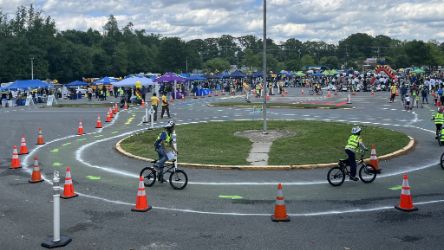
- Host ten bicycle rodeos at different schools.
- Continue sponsorship for adult learn to ride courses for e-scooters and bikes.
P-09: County Employees using Fleet Vehicles
Action Item Details
- Action Item Description: Provide a safe driving program for all County employees that utilize County fleet vehicles.
- Lead: General Services, Finance, Police, Fire/Rescue
- Contributor: N/A
- Why Do This?: The County Government as an employer needs to keep its employees safe and a reduction in crashes involving County vehicles can save taxpayer dollars.
- Budget Sources: Various department budgets.
FY26 Work Plan
- Rollover from FY2025: For non-public safety employees, develop defensive driver training using County Computer Based Training Program and programs similar to the Smith System.
- Monitor crashes involving County vehicles and resulting in injuries and assess opportunities for crash reduction.
P-10: Conspicuity for County Employee Uniforms
Action Item Details
- Action Item Description: Provide high visibility gear for employees working in or near roadways as uniforms are replaced or purchased for new employees.
- Lead: Police, Transportation, Fire/Rescue
- Contributor: Vision Zero Coordinator
- Why Do This?: County employees working on or near roadways can improve their visibility of passing drivers by wearing high visibility gear.
- Budget Sources: Various department budgets.
FY26 Work Plan
- As uniforms are replaced or purchased for new employees, provide high visibility gear.
R-01: Prompt Medical Service
Action Item Details
- Action Item Description: Ensure proper emergency medical care for crash victims through prompt response to incident and proper medical care.
- Lead: Fire/Rescue
- Contributor: Police
- Why Do This?: Prompt emergency response, transport, and care from nearby trauma centers can decrease the morbidity and mortality of crash victims.
- Budget Sources: Operating Program – MCFRS–Operations.
FY26 Work Plan
- Maintain time to scene and time to hospital response times that meet or exceed department standards.
R-02: Planning and Coordination for Safe Traffic Incident Management
Action Item Details
- Action Item Description: Utilize leading practices, policies, and technology to eliminate secondary crashes that occur while first responders are on the scene.
- Lead: Fire/Rescue, Police
- Contributor: Vision Zero Coordinator
- Why Do This?: Ensure safe and collaborative response to traffic collisions. Secondary crashes are often more severe than the primary crash.
- Budget Sources: Seek grant funding or sponsorship for pilot.
FY26 Work Plan
- Determine data needs for regular tracking incident clearance times and secondary crashes.
- Explore opportunities for expanding traffic incident management training for first responders in Fire/Rescue and Police.